![]() |
||
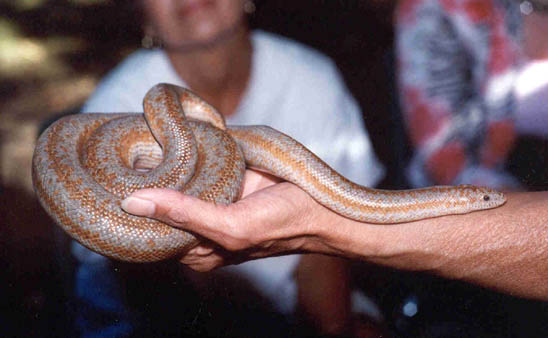
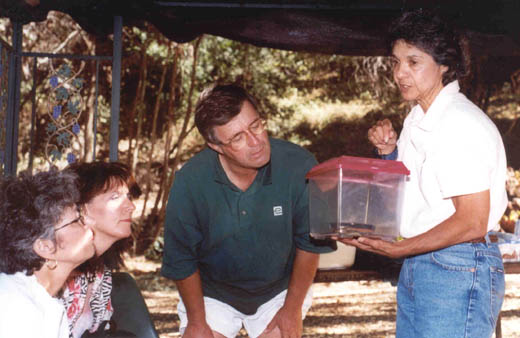
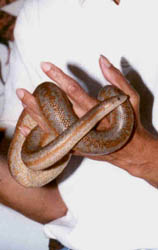
| Naturalist Sylvia Franke (r.) introduces the Rosy Boa. A snake native to California. | ||
![]() |
||
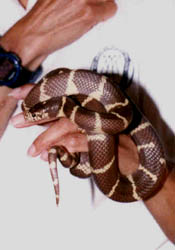
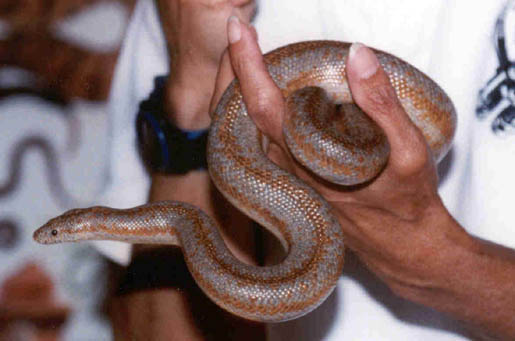
| One of the smallest members of the Boa family, the Rosy Boa rarely exceeds 3 ft. | ||
![]() |
![]() |
![]() |
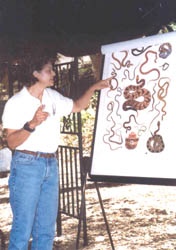
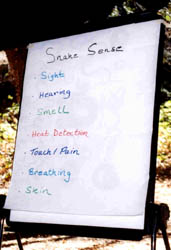
| Sylvia covered a variety of snake topics during her presentation. | ||
![]() |
||
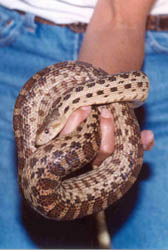
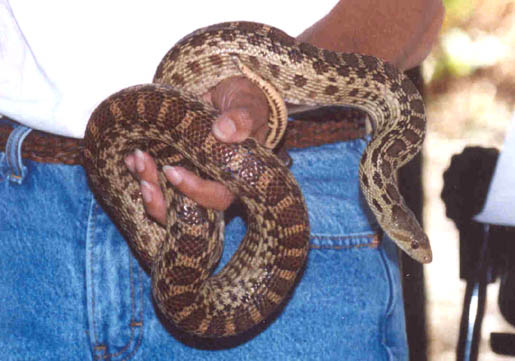
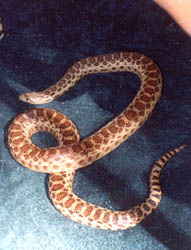
| Sulphur Creek Nature Center's beautiful female California Gopher Snake. | ||
![]() |
||
| The group takes a closer look at a Garter Snake in a small terrarium. | ||
![]() |
![]() |
![]() |
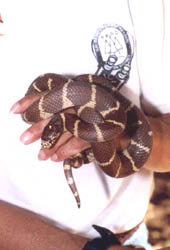
| California King Snake, Rosy Boa, and Gopher Snake. | ||
![]() |
||
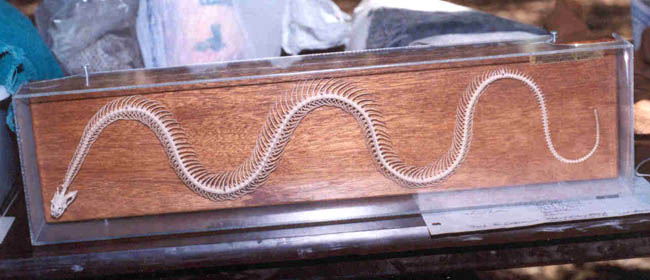
| A Snake's spine and rib cage extends nearly the length of its body. | ||
![]() |
![]() |
![]() |
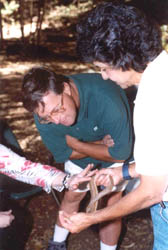
| When picked up, the snakes automatically coiled around Sylvia's hand for support. | ||
![]() |
||
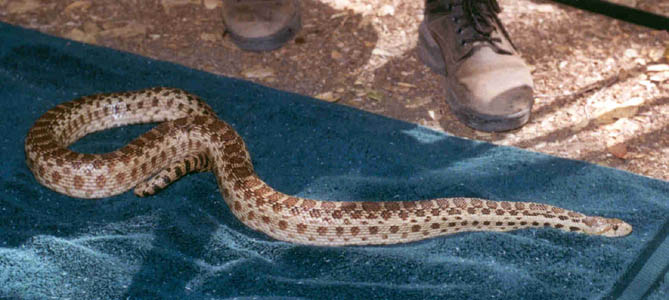
| Placed on a towel, this Gopher Snake slowly uncoiled and began to glide away. | ||
![]() |
||
| King Snakes are immune to the venom of rattlesnakes and will kill and eat them. | ||
![]() |
||
| Rosy Boas give birth to live young and release musk to deter enemies. | ||
![]() |
||
| The Gopher Snake will often hibernate in winter with other snake species. | ||
![]() |
![]() |
|
| Gopher
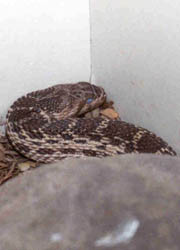
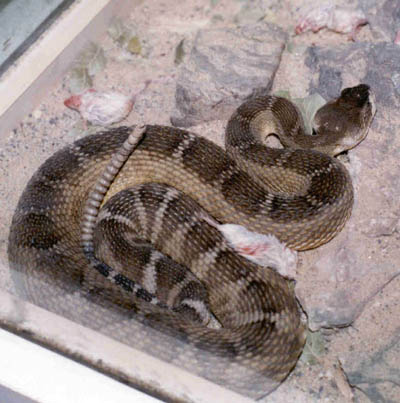
Snake on left is ready to shed its skin (note veiled eye). Snake on right needs no introduction . . . how many rattles can you count? |
||
![]() |
For
more information on its Adult Nature Series, contact the Sulphur Creek Nature Center |
|
| Return to Top. | Go to Salamander Saturday. | |