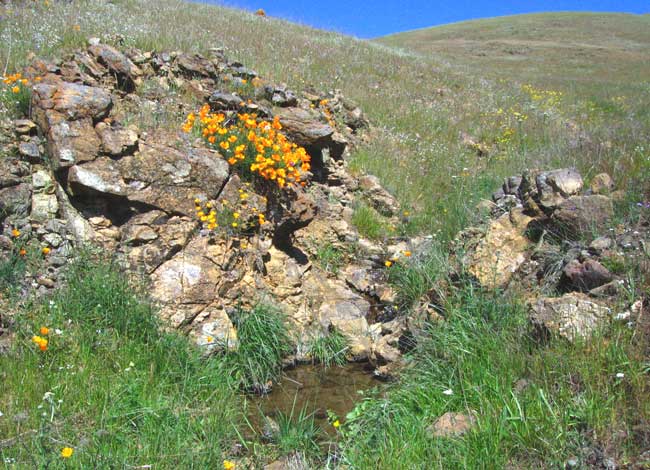
for amphibians like the Western Tree Frog.
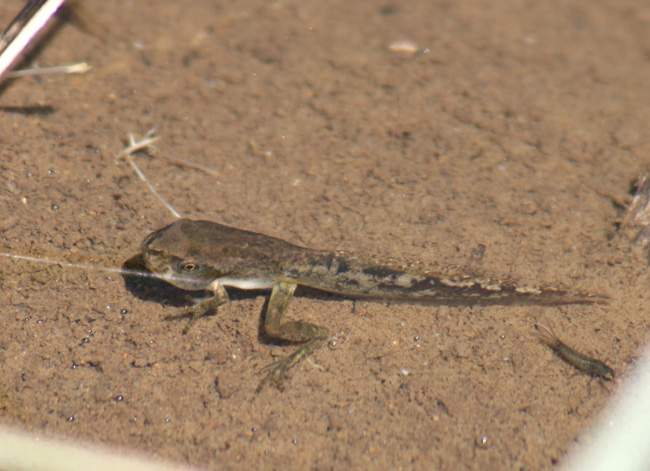
gulp air to develop and strengthen its lungs.
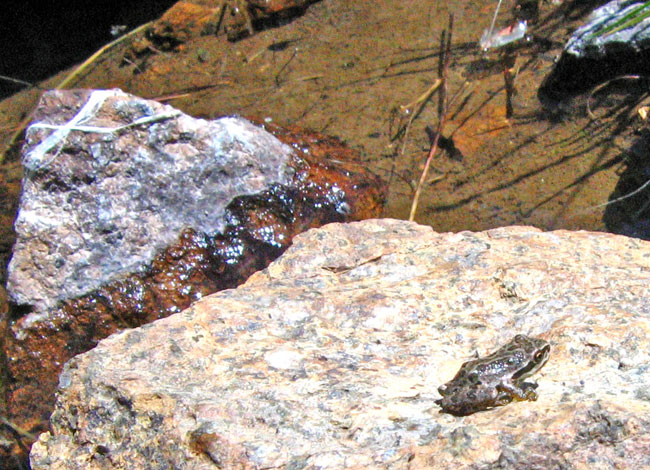
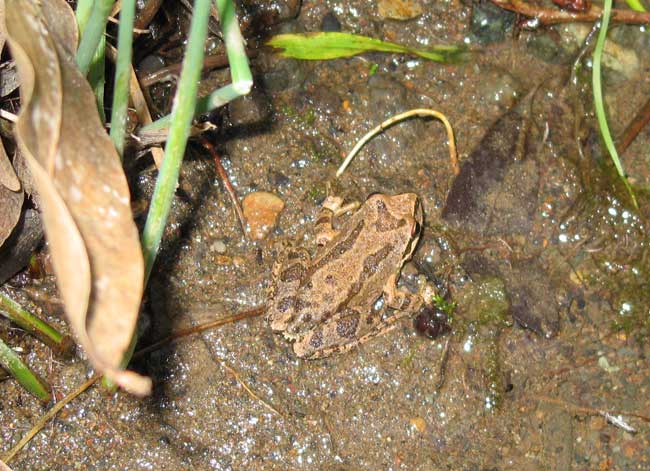
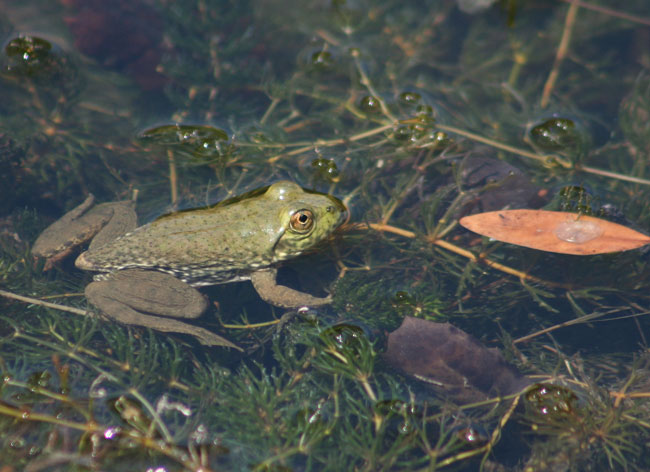
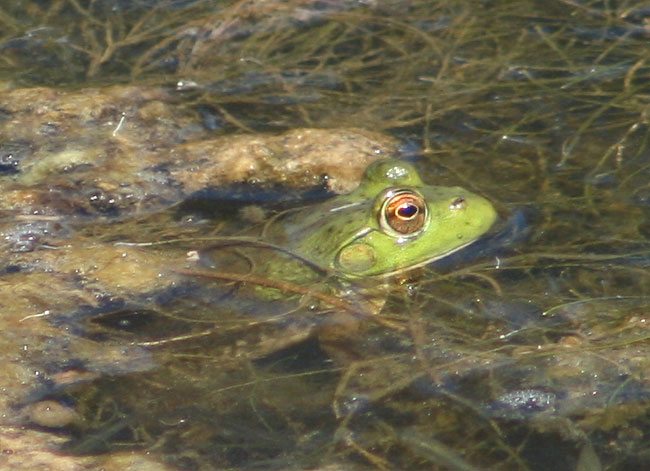
is the non-native Bull Frog (this one's a juvenal).

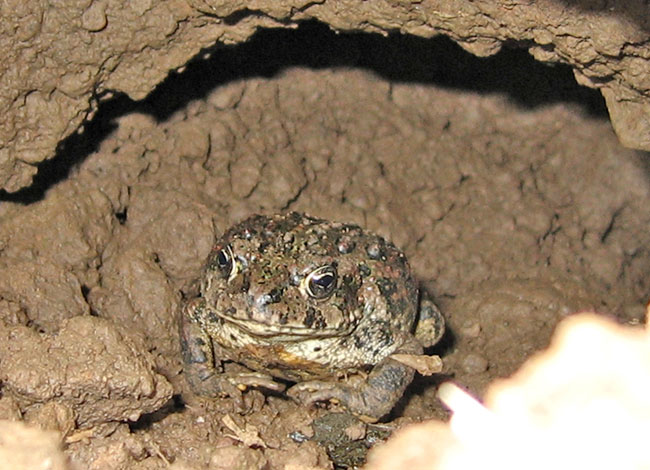
before it evolves to live the rest of its life on land.
Return to Top.
Frogs & Toads |
||||
|
||
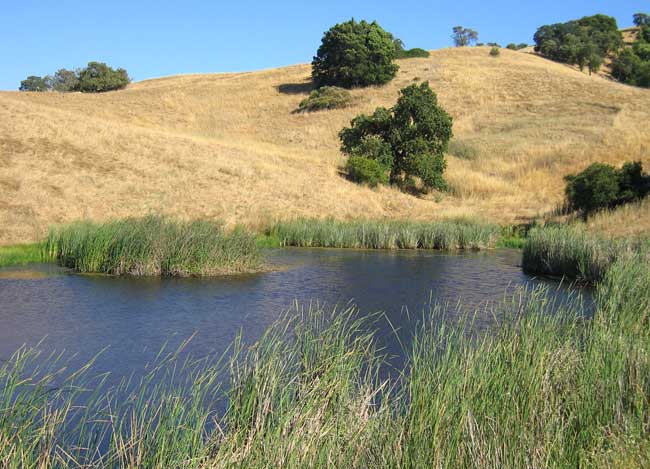
| Small seasonal seeps like this one often become nurseries for amphibians like the Western Tree Frog. |
||
|
||
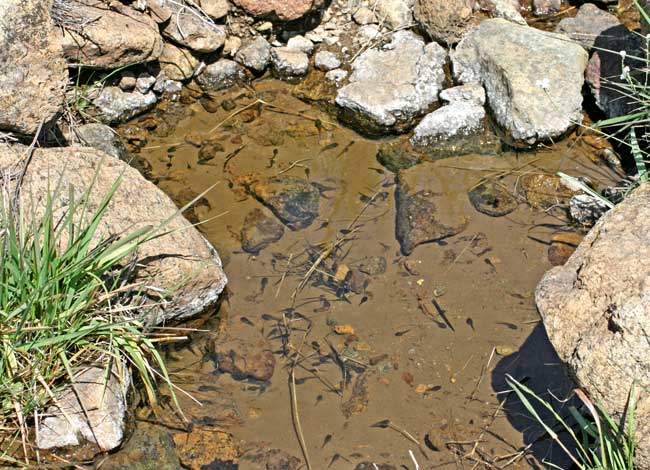
| In a few short weeks these tiny tadpoles will become full-grown frogs. | ||
|
||
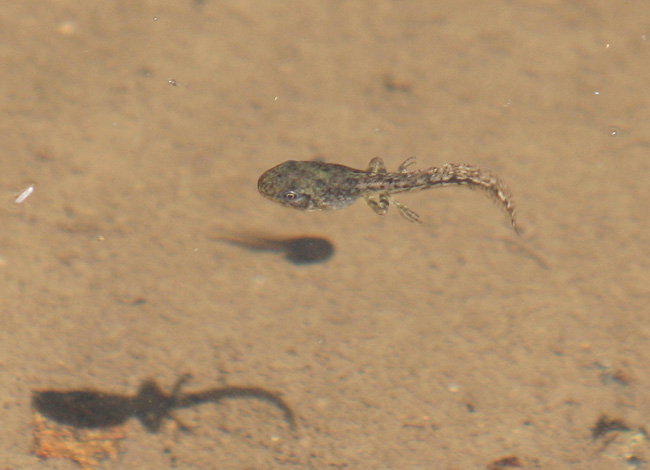
| Tadpoles evolve quickly. This one is changing color and has developed hind legs. | ||
|
||
| Soon it has all four legs and surfaces frequently to gulp air to develop and strengthen its lungs. |
||
|
||
| Then one day it leaves the pond to begin its life on land. | ||
|
||
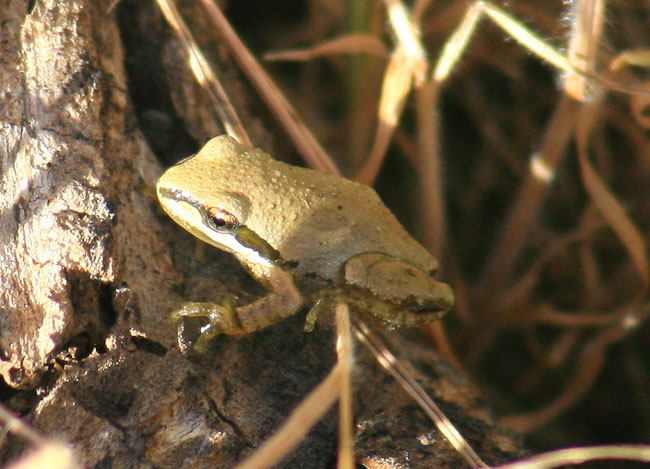
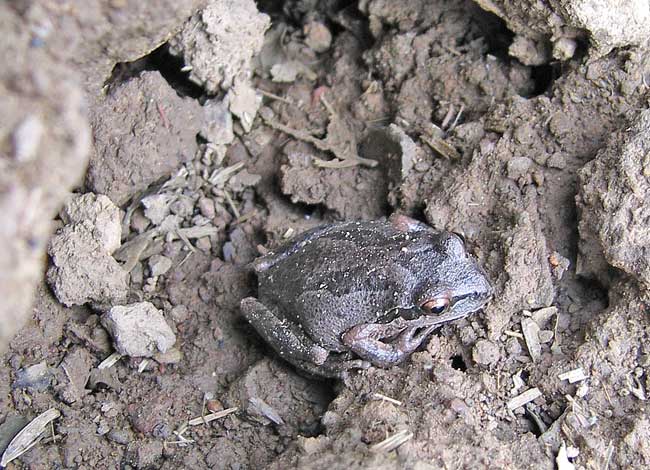
| Western Tree Frogs have many natural enemies so concealment is their best defense. | ||
|
||
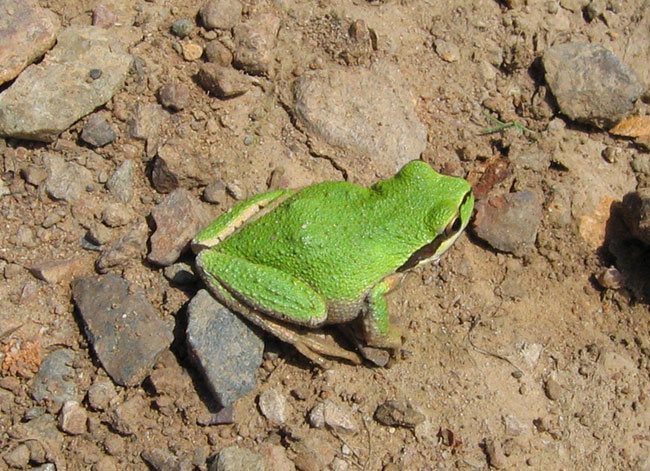
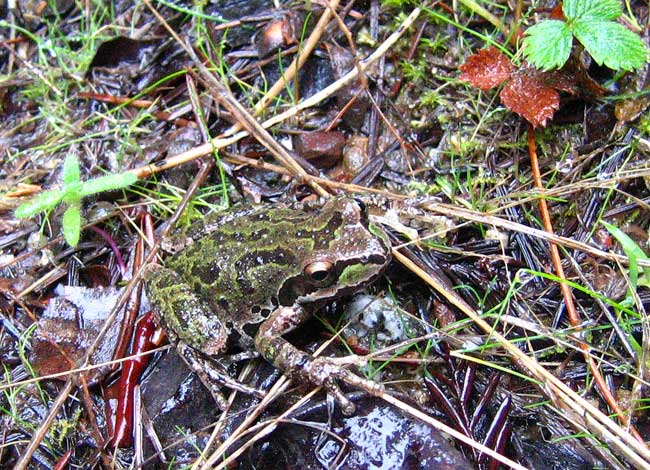
| The skin color of the Western Tree Frog adapts to best match its habitat. | ||
|
||
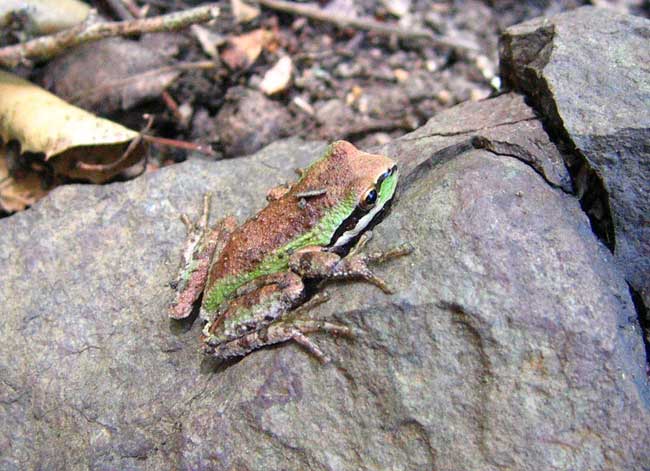
| This frog has left its creek-side habitat for the forest and is changing its skin color. | ||
|
||
| Snakes, raccoons, opossums, skunks, crows, ravens, herons all prey on Tree Frogs. | ||
|
||
| To avoid summer heat, tree frogs take refuge in dark, damp places underground. | ||
|
||
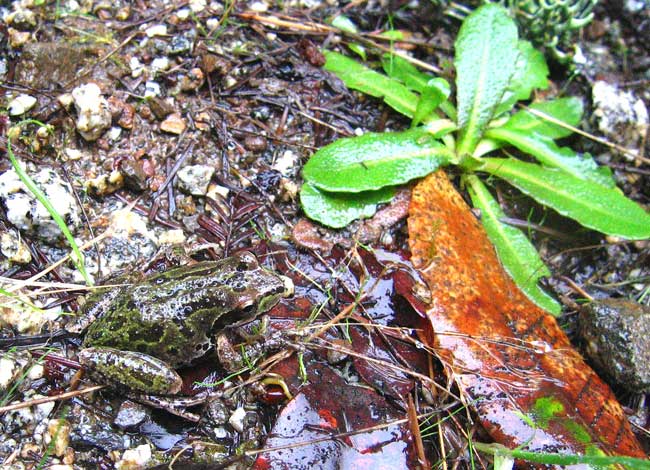
| Nearly invisible on the dark forest floor, the color of this tree frog is almost jewel like. | ||
|
||
| Unless it moves, predators (and humans) aren't likely to see it. | ||
|
||
| Watch for Western Tree Frogs and other amphibians near creeks and stock ponds. | ||
|
||
| Unfortunately, another amphibian found in stock ponds is the non-native Bull Frog (this one's a juvenal). |
||
|
||
| Bull Frogs are voracious predators that devour tadpoles, newt larval, and baby frogs. | ||
|
||
| They also gobble up fish smaller than themselves and baby waterbirds. | ||
|
||
| This Western Toad begins life as a tadpole too, before it evolves to live the rest of its life on land. |
||
Return to Top. |
||