|
 |
|
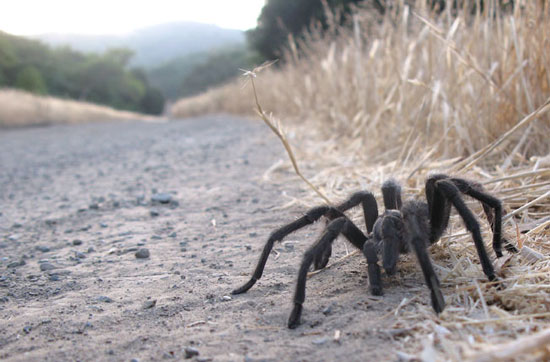
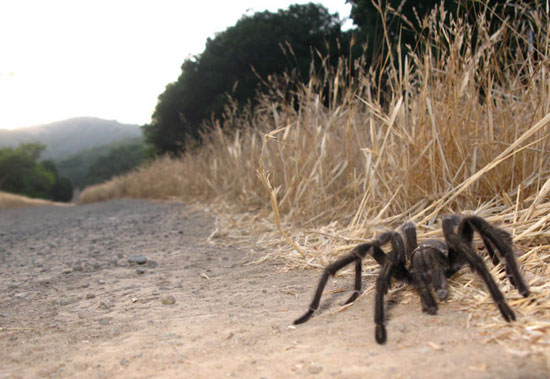
| A late afternoon walk in a nearby county park. Sharing the trail with a large male tarantula. |
|
 |
|
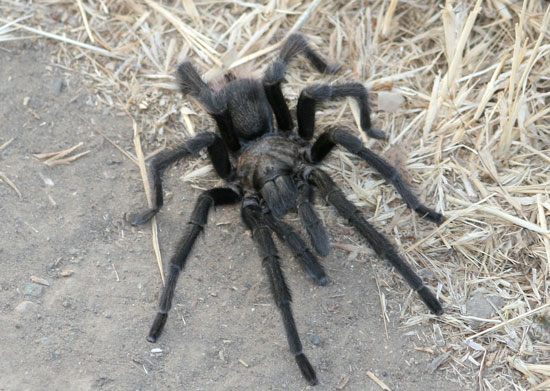
| Tarantulas are a familiar sight in Sept/Oct as they migrate in search of new mates. |
|
 |
|
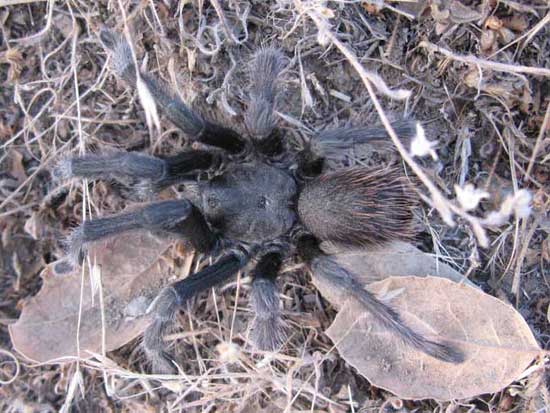
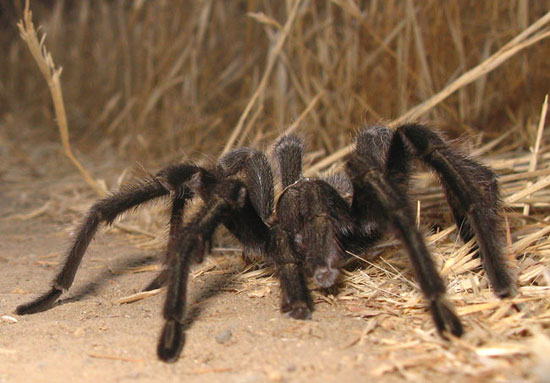
| Their tiny eyes are close together on top of their bodies to better see their surroundings. |
|
 |
|
Shy and non-agressive, but if obstructed or threatened, |
|
 |
|
| Tarantulas are fragile, sensitive creatures. Observe, but avoid handling as they can inflict a painful bite. |
|
The Misunderstood Tarantula
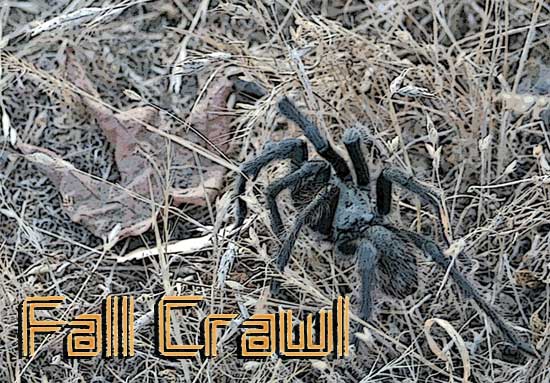
The mere sight of a tarantula is often enough to send some people into a shrill retreat. While they may look fierce, tarantulas are generally harmless. Their venom is comparable to that of a bee, causing harm only when the victim is allergic. There have been no reported accounts of a human succumbing to the bite of this spider. A person bitten by a tarantula can expect some swelling, numbness or itching.
Tarantulas are commonly seen at this time of year in open space parks, most often in late afternoon or early evening. Tarantulas tend to be shy and hide in burrows or crevices during the day. They’ll often take advantage of abandoned rodent holes or take refuge under rocks and they always live alone.
Unlike most spiders, tarantulas do not spin webs. They hunt and rely on pursuit and speed to capture unsuspecting crickets, roaches, moths, other small spiders and occasionally lizards and/or birds. Since their metabolisms are slow, they can refrain from eating for months.
These remarkable spiders have been reported to live as long as 30 years! They reach sexual maturity around ten years. Females lay between 500 and 1,000 eggs which hatch six to nine weeks later.
As most species in nature, they prefer flight to fight and would rather be left alone. So the next time a tarantula happens by, celebrate its quiet grace. Commend it for keeping the pesky bug population down. And, allow it to go freely on its valuable life’s mission.
From an article by Marielle D. Marne in Canyon County News
|
|
| Return to Top. | For more information, click here. |